Augmented Reality Game
2024
Transforming playful team-building with immersive design
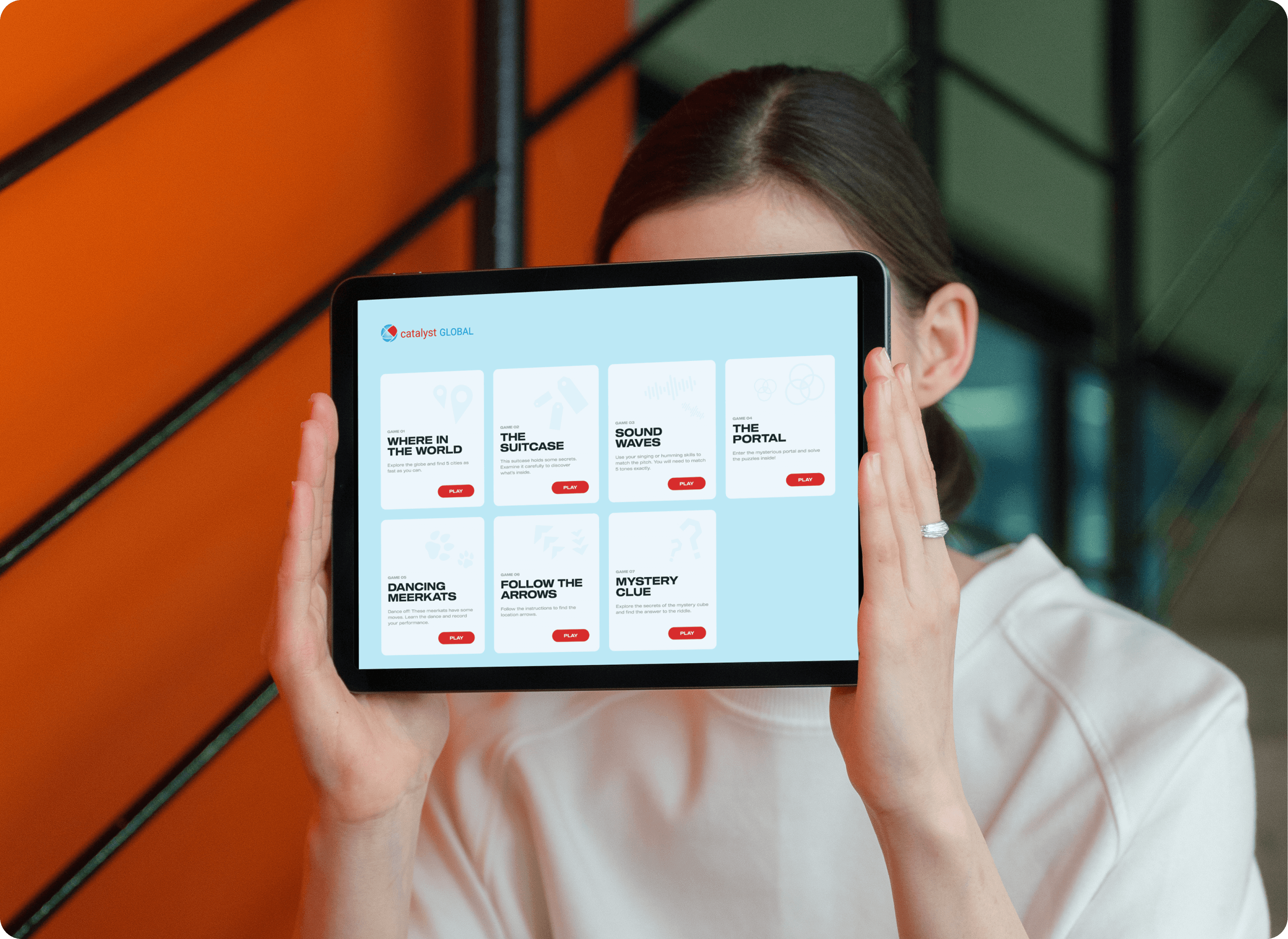
Project Snapshot
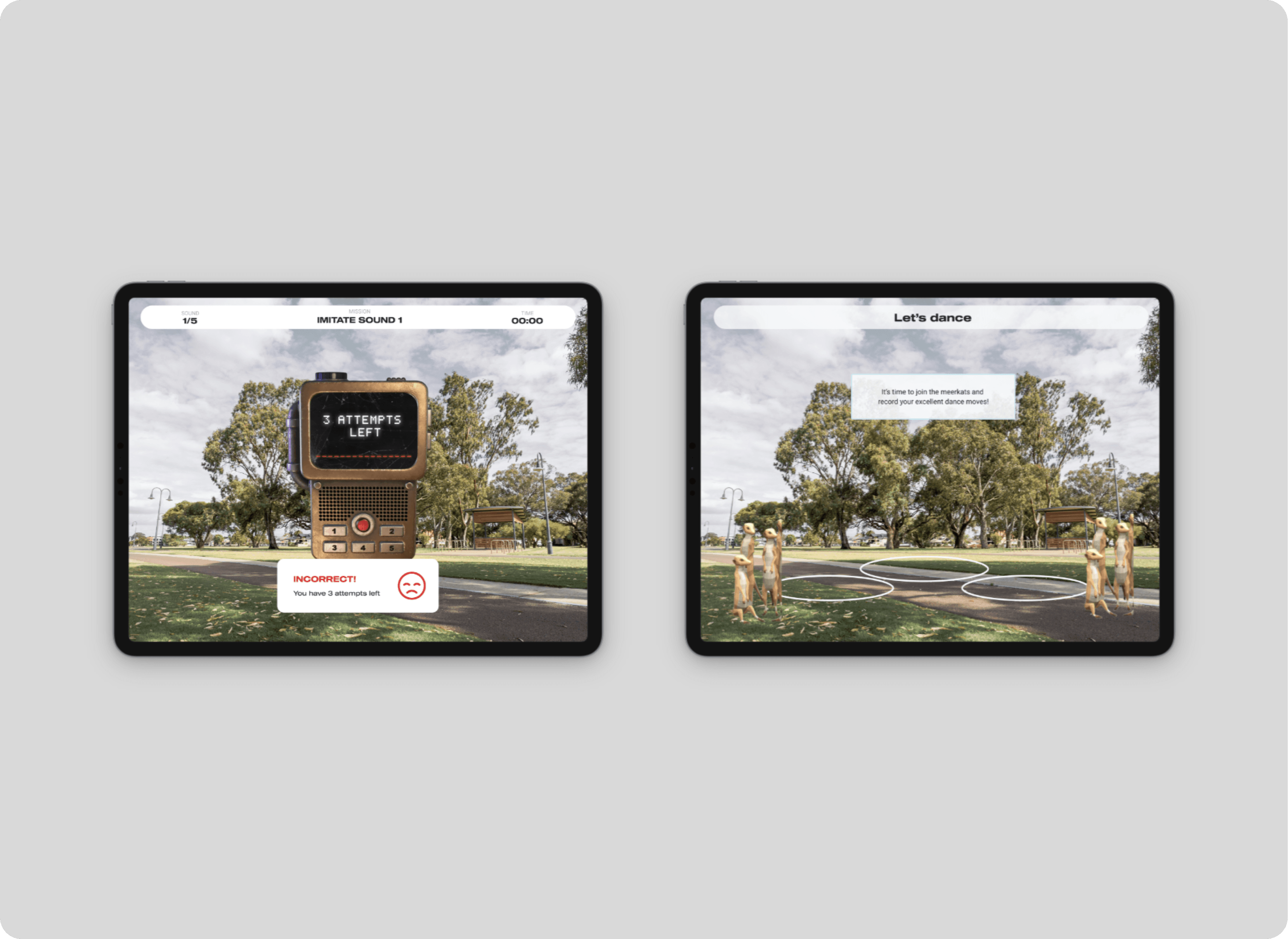
Catalyst XR, an award-winning creative technology studio specialising in WebXR and immersive experiences, contracted me to design seven AR mini-games for a corporate client hosting team-building events across Australia. The games needed to work on tablets, require minimal facilitator instruction, and engage participants who'd likely never used AR before. With only 20 hours to deliver development-ready designs, I led the UX/UI effort—mapping game flows, designing intuitive onboarding, and creating a visual identity that balanced playfulness with brand alignment. This project demonstrates how thoughtful interaction design can make emerging technology accessible and delightful, even under extreme time constraints.
The challenge
Making new technology feel obvious
The challenge wasn't just designing games—it was designing for a medium most users had never experienced. AR demands different thinking than traditional screen-based design: digital overlays must integrate seamlessly into physical space, interactions need to feel intuitive without prior instruction, and onboarding must build confidence, not confusion.
Understanding AR design principles
Designing for AR shares fundamentals with traditional UX/UI, but introduces unique considerations:
These principles shaped every design decision—from how users scan their environment to how game objectives appear in space.

Design goals
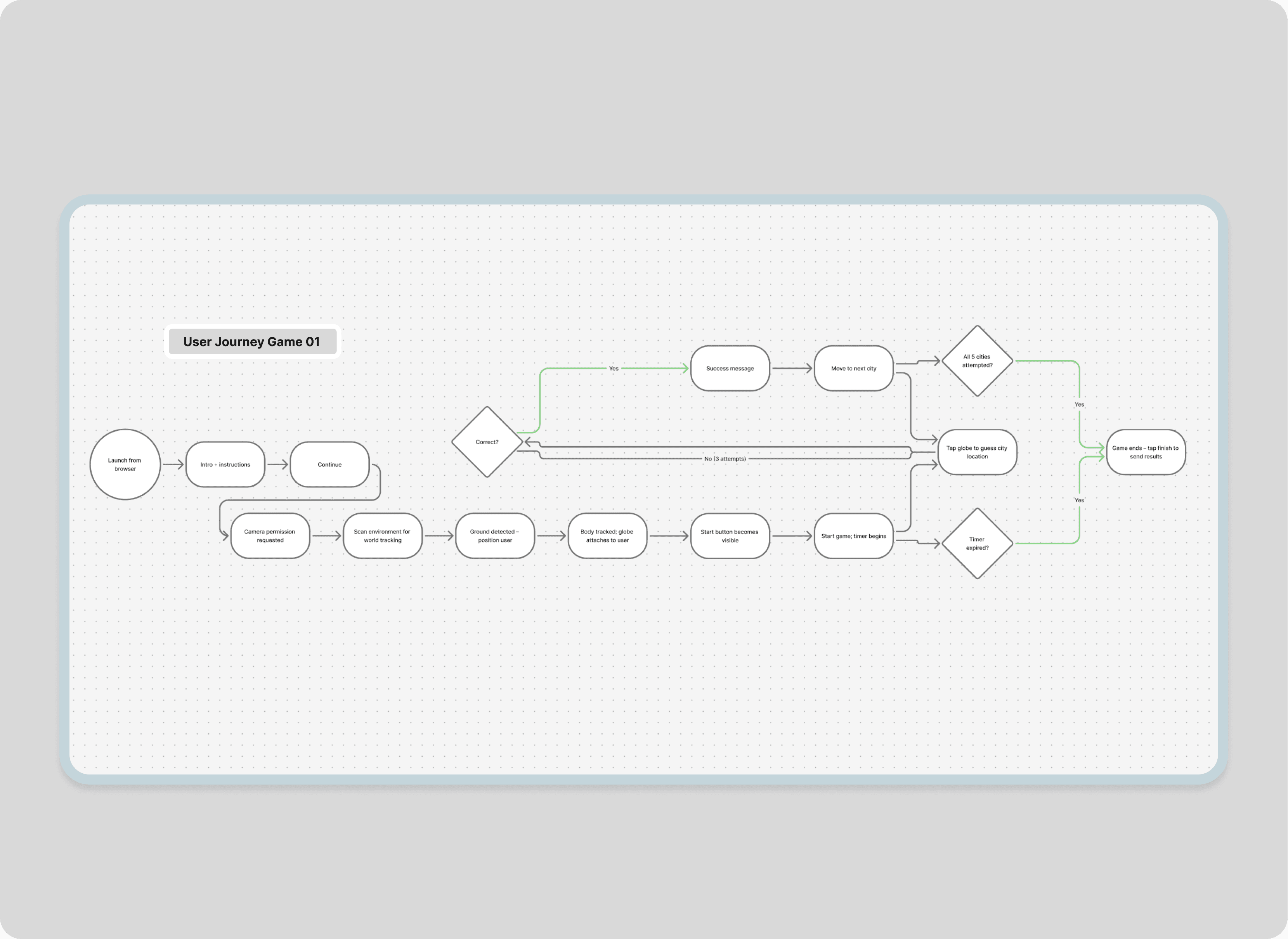
Mapping logic before pixels
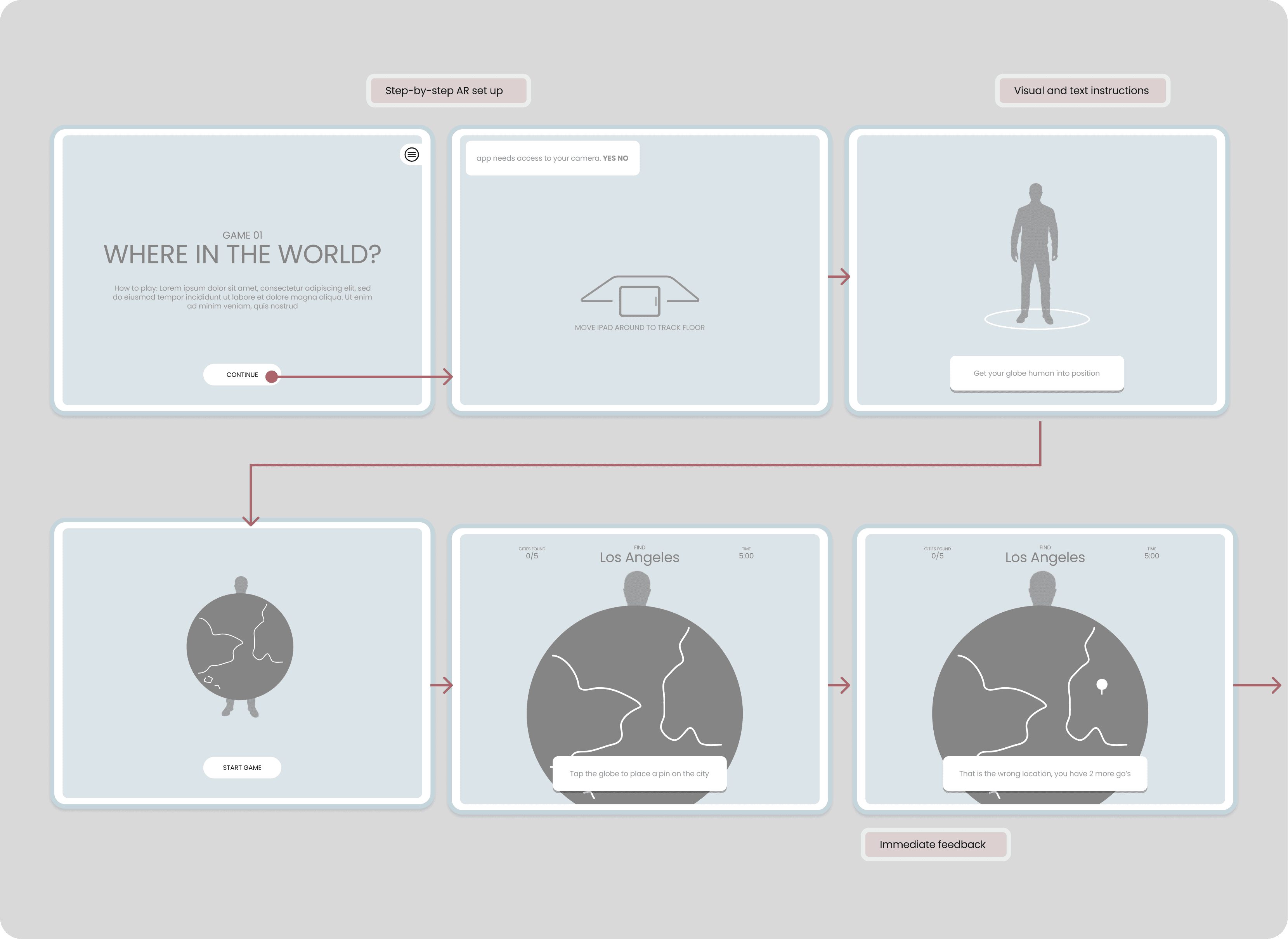
Once the Creative Director and client finalised each game's objectives, I mapped user flows and game logic through low-fidelity wireframes. The goal was ensuring each game felt "obvious"—not because it was simple, but because the flow matched natural human behaviour.
Design decisions
Minimised cognitive load: Each game required no more than 4-5 steps to understand and play
Clear task structure: Users always knew what they were searching for, what actions to take, and when they'd completed the objective
Reduced instruction dependency: Game flows were designed to be self-explanatory, allowing facilitators to step back rather than constantly guide
Progressive complexity: Early interactions were simple, building confidence before introducing more nuanced mechanics
This phase reinforced that the most seamless experiences don't announce themselves—they simply work.
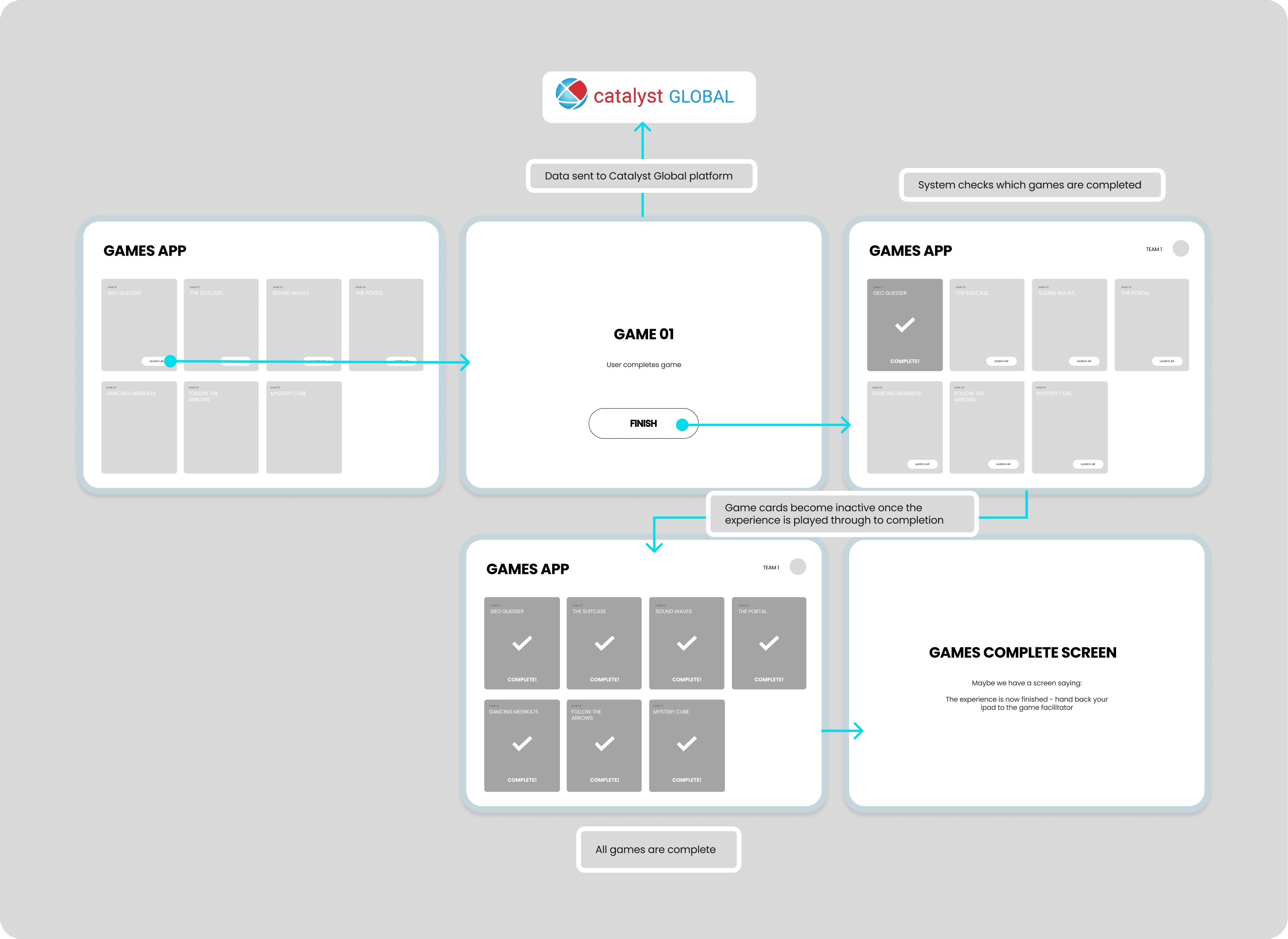
Design decision 01
Onboarding builds confidence, not confusion
For many users, these games would be their first AR experience. Poor onboarding could mean immediate abandonment; effective onboarding could turn hesitation into curiosity.
My approach
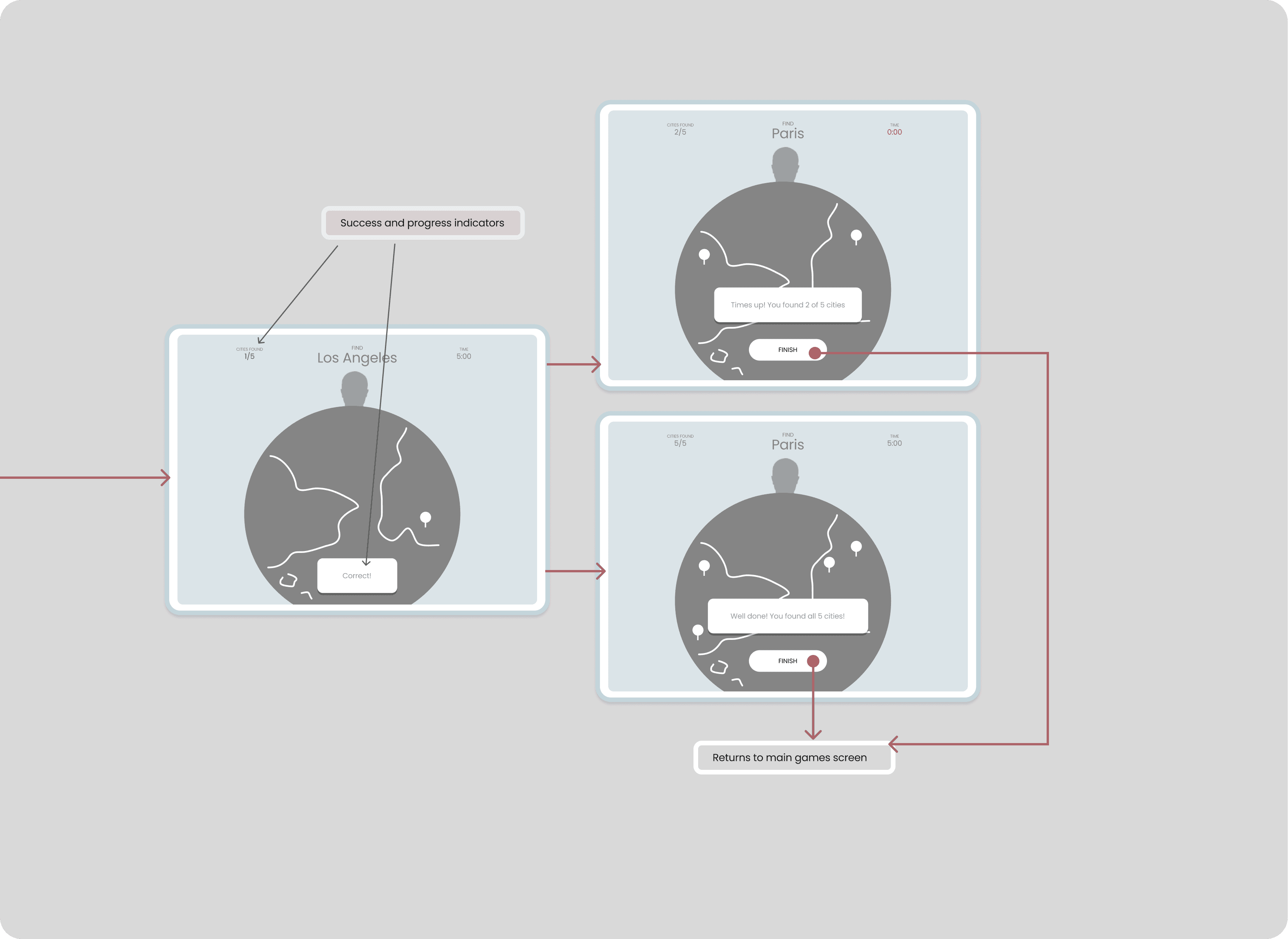
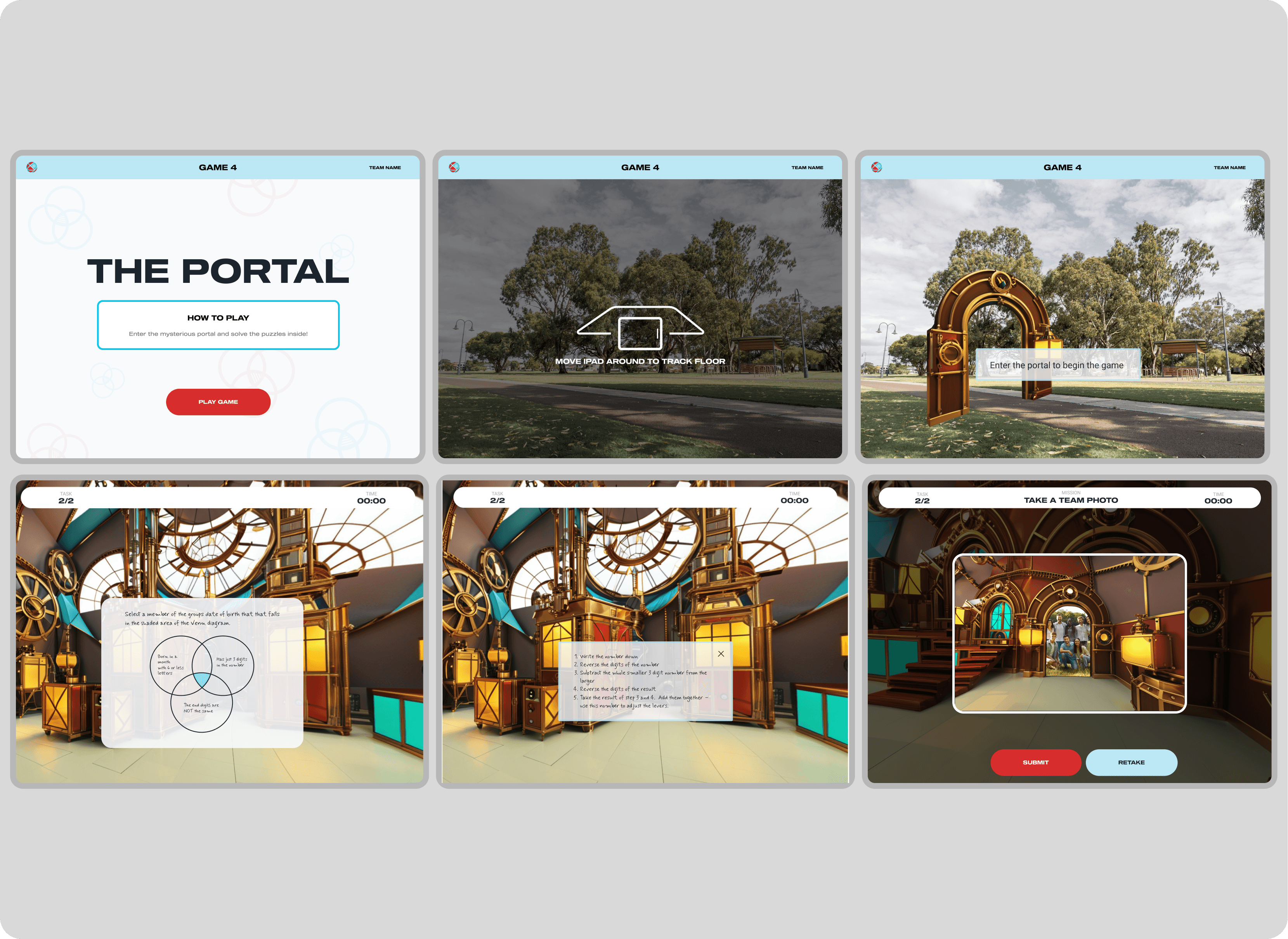
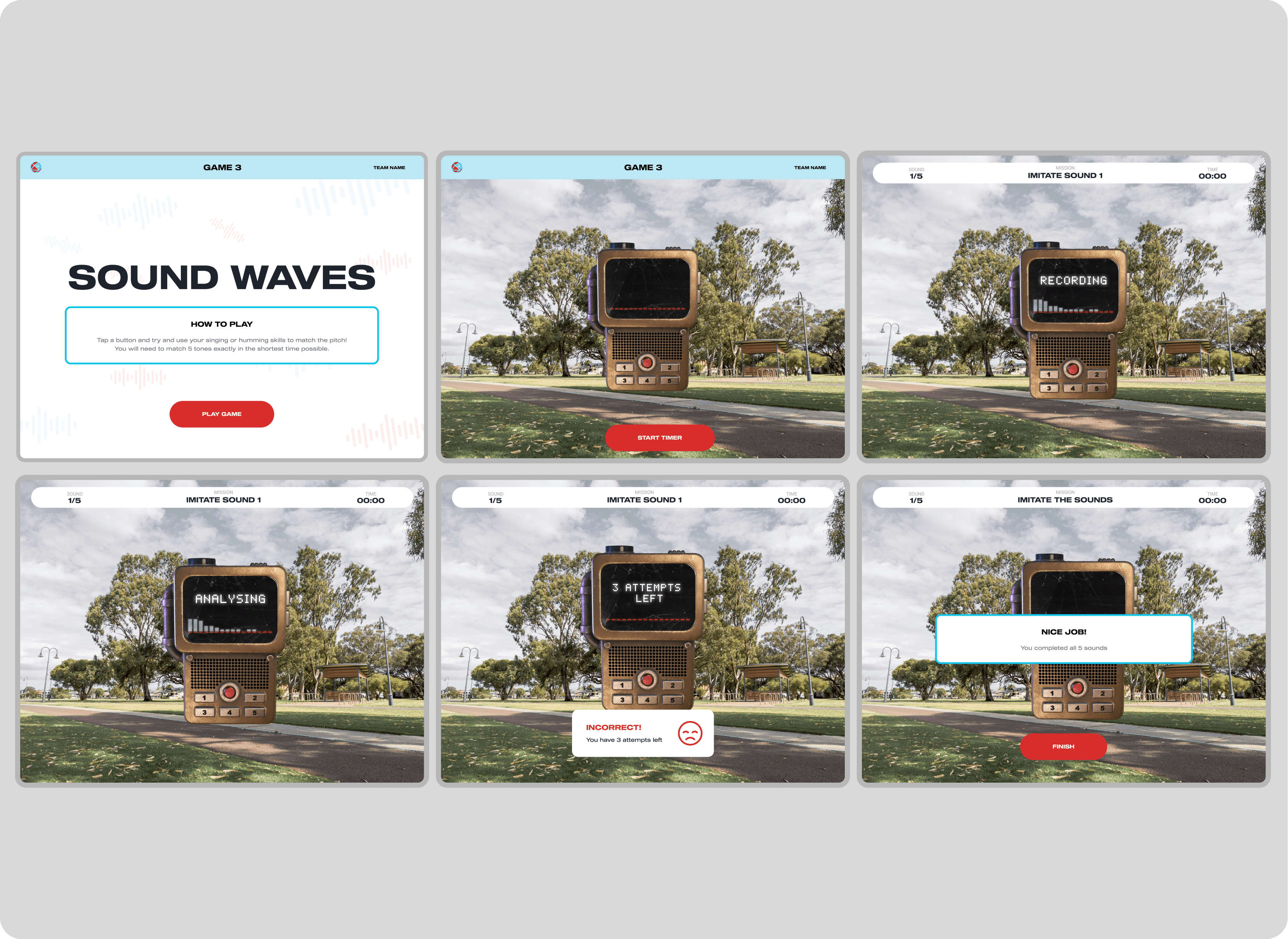
Step-by-step AR setup: Guided users through camera permissions, environment scanning, and digital placement with clear visual prompts
Immediate feedback: Confirmed every interaction—when users tapped, scanned, or completed actions, the interface responded instantly
Visual + text instructions: Combined imagery with concise copy to accommodate different learning styles
Success indicators: Showed progress through each game stage, reducing uncertainty about what comes next
Design decision
Good AR onboarding doesn't just explain the interface—it builds confidence by making users feel competent from the first interaction. When people see their actions have impact, they lean in with curiosity rather than pulling back with hesitation.
Design decision 02
Conceptual design: when 'old meets new' didn't fit
Once game flows were validated, I moved to visual design—my favourite phase, where delight and memorability enter the equation.
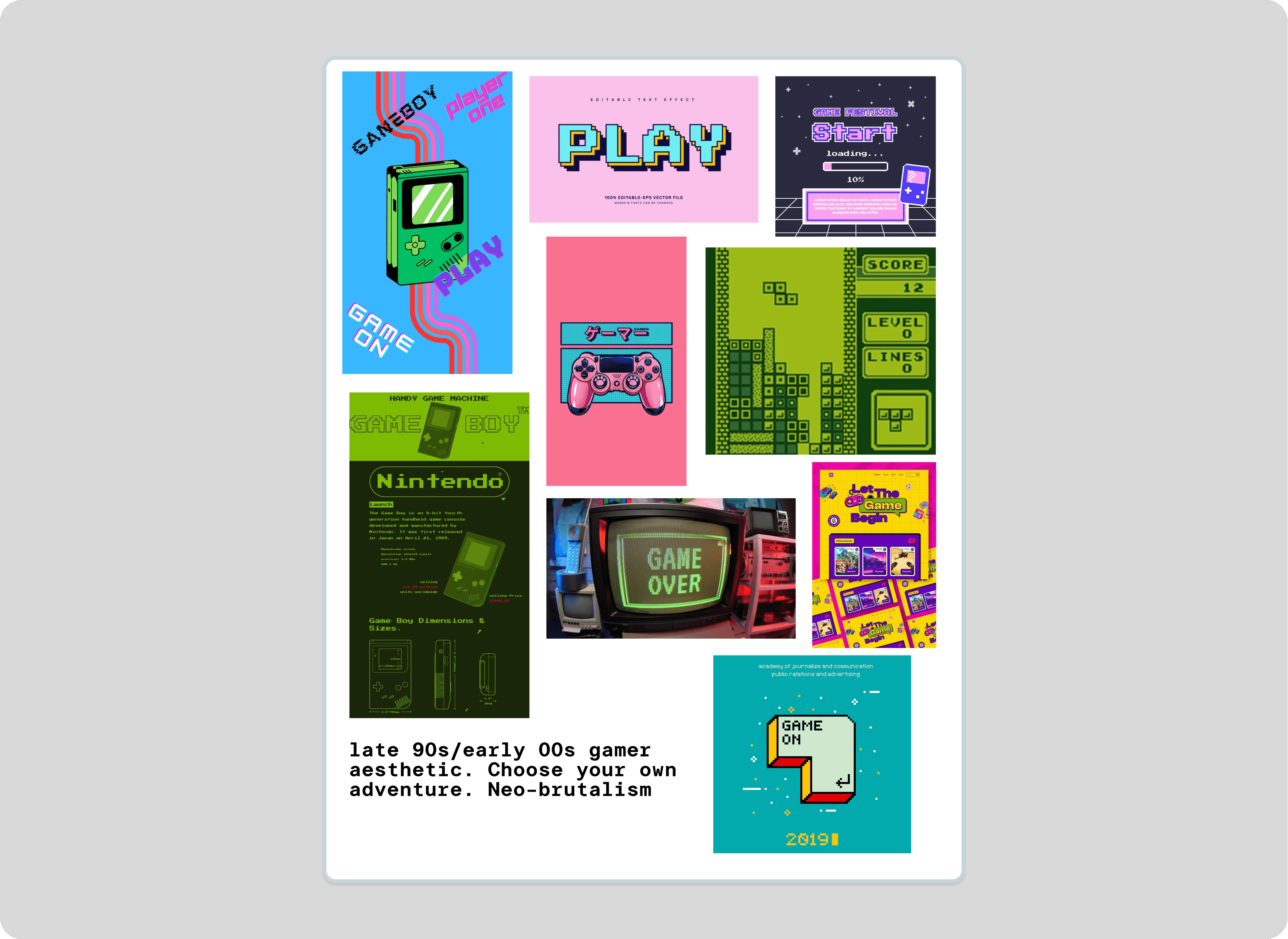
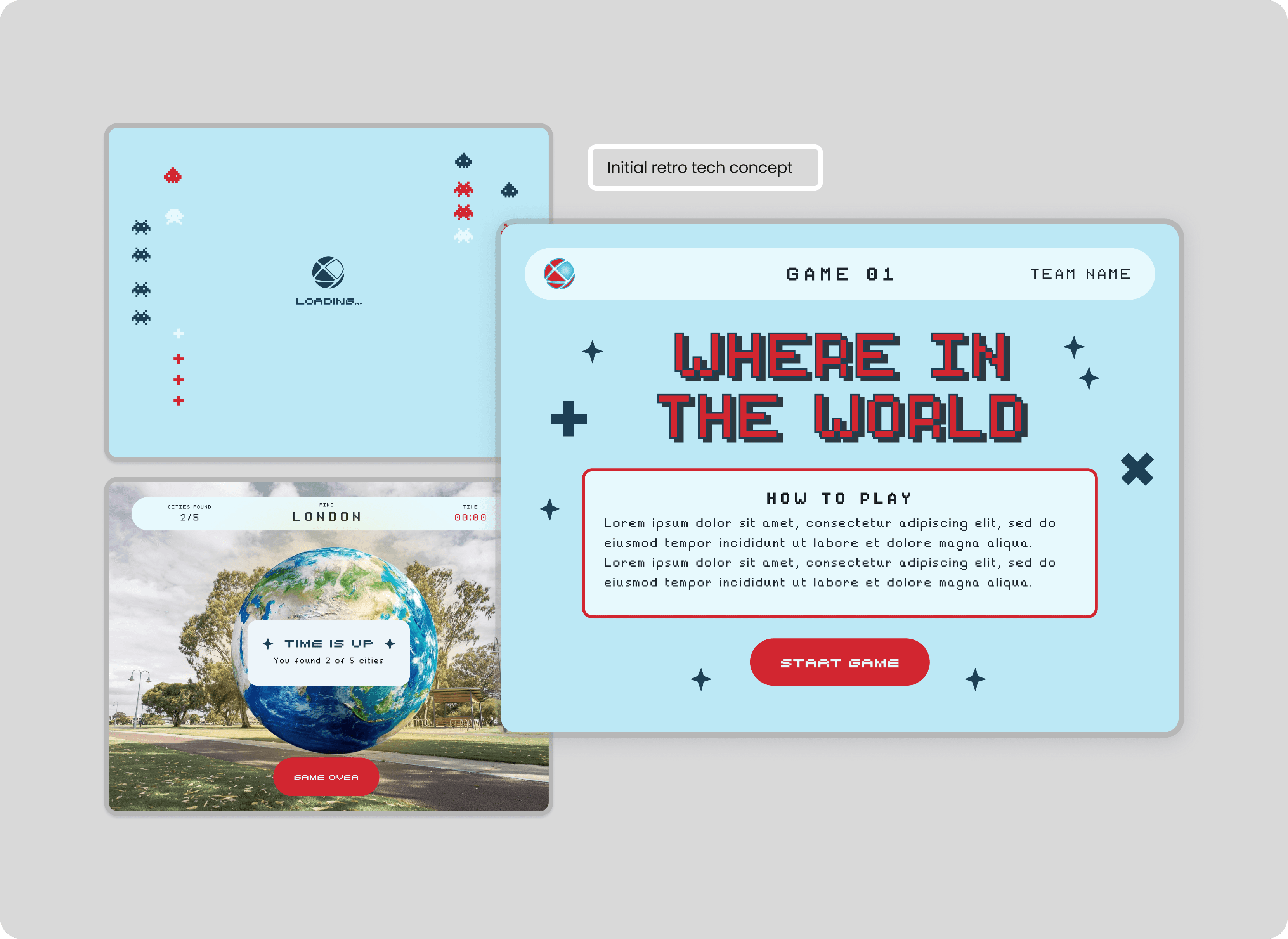
Initial concept: retro tech
I proposed a retro gamer aesthetic, blending 80s/90s nostalgia with cutting-edge AR technology. Drawing from neo-brutalist UI trends—raw geometric shapes, bold contrast, unpolished edges—I loved the conceptual tension of "old meets new."
The pivot
The client appreciated the concept but felt it didn't align with their existing brand identity. This wasn't a setback—it was an opportunity to refine and collaborate.
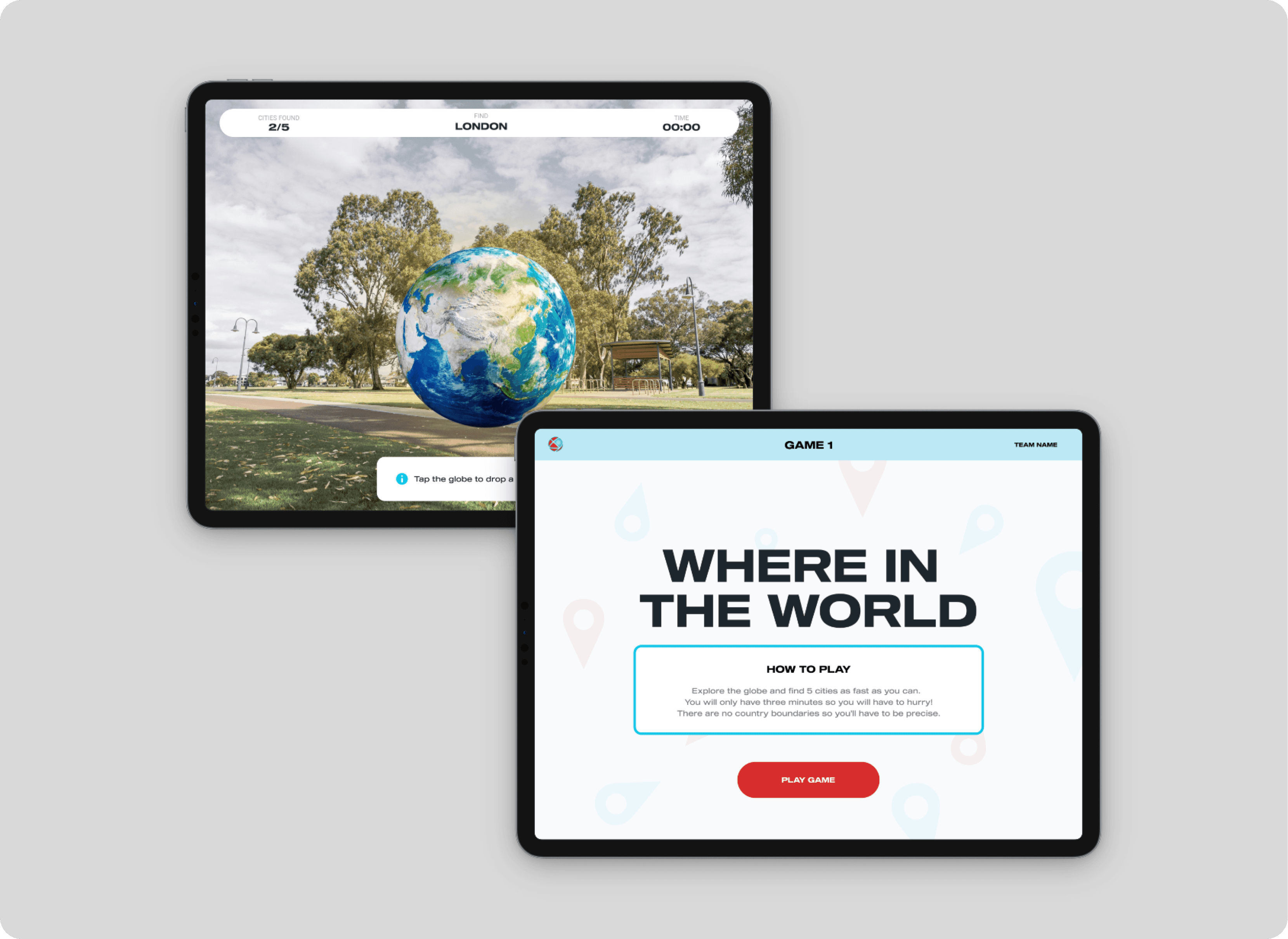
The second concept: brand-aligned playfulness
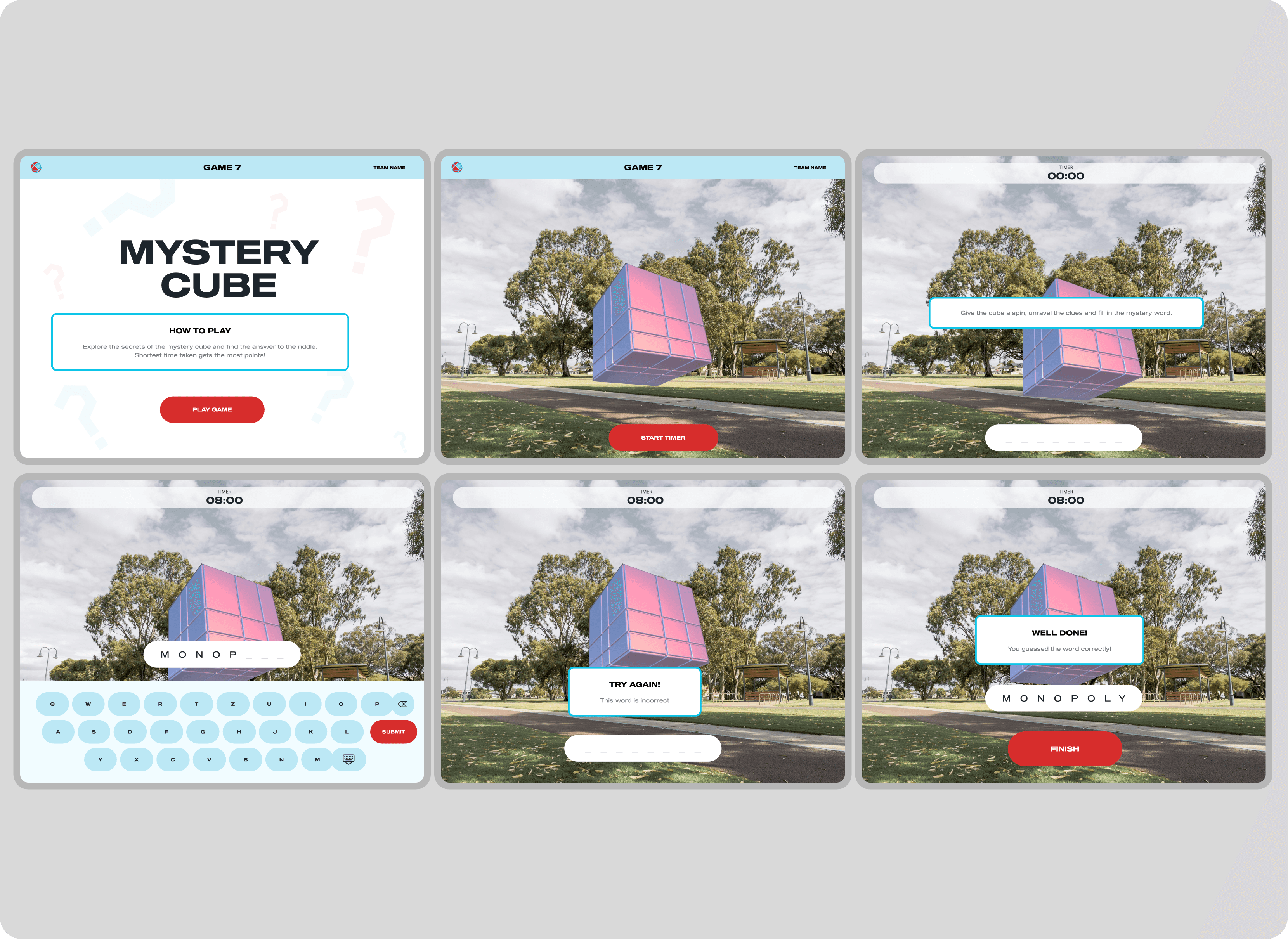
I developed a direction that reflected their established visual language whilst retaining playfulness and energy. This concept was chosen, and we moved forward.
Design decision
While I'm passionate about creative concepts, my goal is always meeting both user needs and business objectives. Flexibility and iteration aren't compromises—they're essential to delivering solutions that work in the real world.
Design decision 03
Speed over perfection: pragmatic design under constraint
The biggest challenge was the compressed timeline. With development waiting and build experimentation needed, "good enough" became the guiding principle.
My approach
Prioritised essential elements: Focused on core UI components and interaction patterns developers needed immediately.
Collaborated tightly: Worked directly with the 3D illustrator and dev team, trusting their expertise to handle experimentation during build.
Delivered iteratively: Handed off assets in stages rather than waiting for polish, keeping production moving.
Design decision: In agile projects, perfection can be the enemy of progress. Delivering development-ready assets quickly allowed the build to proceed whilst leaving room for iteration. This taught me the value of being pragmatic and collaborative—sometimes shipping is more valuable than polishing.
Impact
How I'd measure success in production
Since this was a client project delivered to production, traditional post-launch metrics weren't accessible to me. However, if I were measuring impact, I'd track game completion rates, average time to onboard, facilitator intervention frequency, and participant engagement scores to validate that the games achieved their team-building objectives.
What the project achieved:
Fast, confident onboarding reduced facilitator involvement and enabled self-directed play
Intuitive game flows allowed first-time AR users to engage immediately without technical friction
Brand-aligned visual design maintained client identity whilst delivering playful, memorable experiences
Developer-ready assets delivered on schedule, enabling production team to experiment and optimise in build
Seven functional AR games successfully deployed for corporate team-building events across Australia
Restrospective
What this project taught me
AR design is spatial design. You're not just designing screens—you're designing for physical movement, environment awareness, and the relationship between digital and real space.
Onboarding determines adoption. For emerging technology, the first 30 seconds are critical. If users feel confident early, they'll engage deeply; if they feel confused, they'll disengage immediately.
Constraints fuel pragmatism. Working under tight timelines forced me to prioritise ruthlessly and trust collaboration. The result was a project delivered on time that met all objectives.
Concepts serve users and business equally. A brilliant creative direction that doesn't align with brand goals or user needs is just beautiful decoration. Effective design solves for both.
Playfulness builds connection. When AR is done well, it transforms passive activities into active, memorable experiences that genuinely bring people together.